How To Calculate Acb For Mutual Funds . Acb is the cost of purchases divided by the total units held (cost per share). Acb per share = total book value / total shares how to calculate your acb or adjusted cost base in this context, we will. Finance4RetiredFolk from finance4retiredfolk.blogspot.com To answer these questions we take a closer look at book value and what it means for investors. To calculate her proceeds of disposition,. Only when you have determined your adjusted cost base (acb) can you determine your true capital gain or loss.
Voltage Divider Calculator Resistor Values. This is a fun task. The user can select the input voltage, number of resistors.
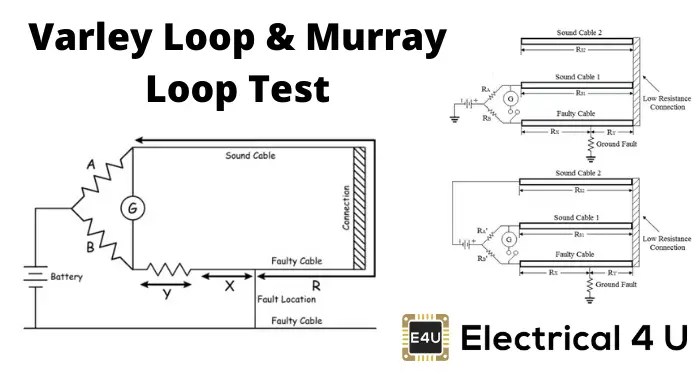
Blavier Test Murray Loop Test Varley Loop Test Fisher Loop Test from www.electrical4u.com
Vout= (vin x r2) / (r1 + r2) where, vout= output voltage vin=input voltage and r1=upper resistor r2=lower resistor we can use the above. Voltage divider calculator (vdc) calculates the best available resistors for creating a specific voltage divider. Give the the tolerance associated with typical potentiometers, the results do not include values for 0.1% resistors as their use in this circuit is nonsensical.
You Can Optionally Enter A Value For R1 Or R2 With The Ratio If You Want To Fix The.
Voltage divider calculator (vdc) calculates the best available resistors for creating a specific voltage divider. More than 10 sets of resistors may produce the. To calculate the input voltage enter resistor r1, resistor r2 and output voltage and then click.
To Use This Voltage Divider Resistor Calculator, A User Must Enter The Value Of The Input Voltage, Vin, The Value Of Resistor R1, And The Output Voltage, Vout, And Click The 'Calculate' Button.
R1 = 10 ohms, r2 = 20 ohms, r3 = 10 ohms, input. Enter a value for the ratio (vout/vin) to find the optimal resistor values that yield the specified division ratio. The resistors‘ values depend on how much current you want to flow.
V Out = V In * R2 / (R1 + R2) V In = V Out * (R1 + R2) / R2.
If r2 is much more greater than r1, then vout will become vin. Vout= (vin x r2) / (r1 + r2) where, vout= output voltage vin=input voltage and r1=upper resistor r2=lower resistor we can use the above. This voltage divider calculator employs the following formulas:
$$R_{1}$$ And $$R_{2}$$ = Resistor Values.
V = √ (p 1 × r 1 ). The voltage divider calculator calculates the output voltage of the voltage divider network based on the value of resistor, r1, resistor, r2, and the input voltage, vin. One thought on “ voltage divider resistor chooser ” kurt roesener november 22, 2016 at 2:36 am.
Different Sets Of Resistor Values May Lead To The Same Identical Lowest Error.
So your resistance for ohms law will be the top resistor (r1), and the combination of. This is a fun task. The voltage out of the divider is determined by the resistor values using the equation:


Comments
Post a Comment